Can We Spend a Few Hours in the Yard Without Being Bothered by Annoying Insects?
Learn how to enjoy your yard without annoying insects through hygiene, non-chemical methods, and intelligent control, without destroying the beneficial ecosystem.

Pest Control Manager at "Biogard" EOOD
- Published on
- min. read
- 7 min. read
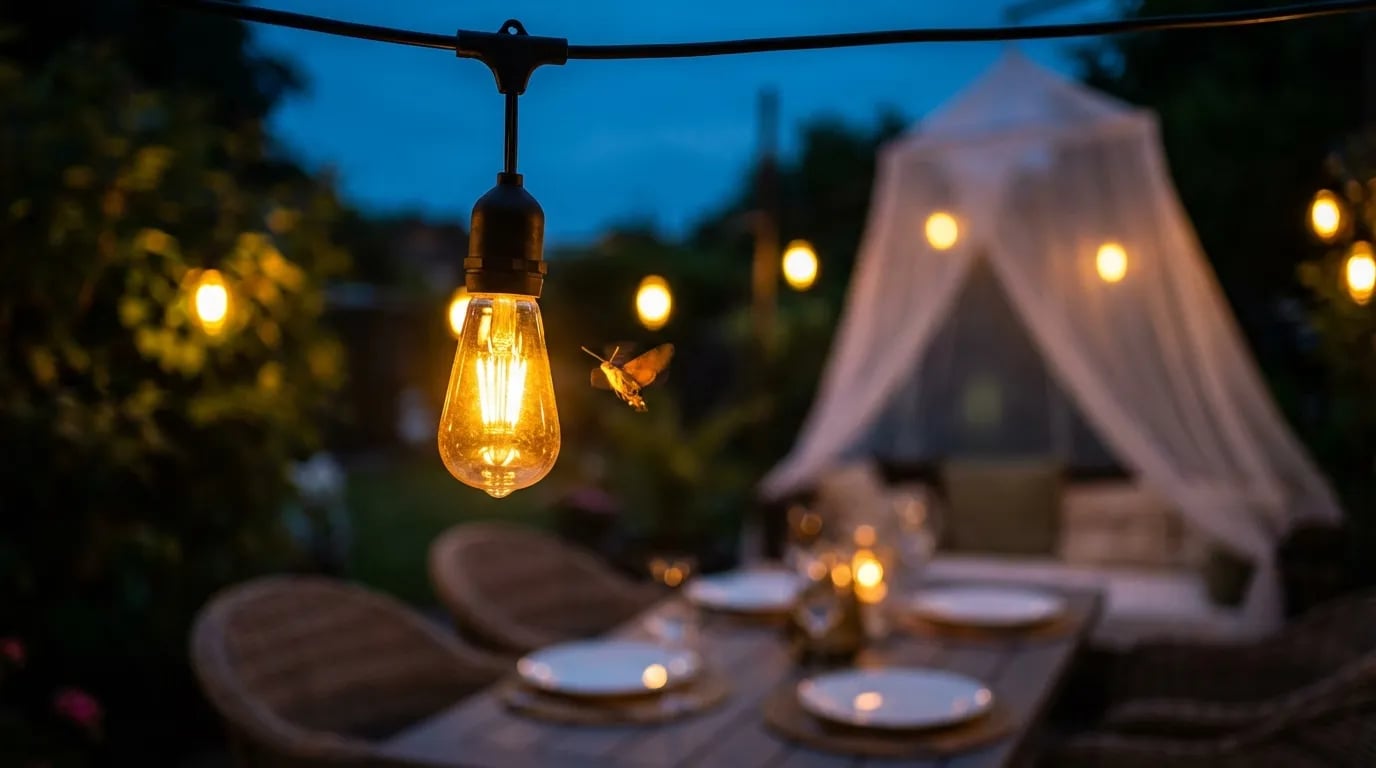
Table of Contents
The Balance Between Our Comfort and the Laws of Nature
Imagine the following picture: a warm summer evening, a light breeze, a glass of cold drink, and pleasant company on the veranda. This is the idyll we all strive for when we invest time and money in maintaining our yard and garden. But very often this idyll is disrupted by buzzing, biting, and incessant hand-waving. In our pursuit of comfort, our first reaction is often "war" - we grab the sprays and start spraying everything in sight.
Here, however, we need to stop and think. Our garden, although by title deed it is our property, in a biological sense does not belong only to us. It is a home, a refuge, and a living environment for thousands of organisms. From the microscopic bacteria in the soil to the birds in the branches, every participant has its role. Insects are the most numerous inhabitants of this planet, and our yard is their natural territory. Not all of them are harmful - on the contrary, a vast number are indifferent to us or are extremely beneficial. The idea that we must exterminate "everything that moves" is not only morally outdated but also practically impossible and harmful to ourselves.
The real question is not how to kill everything, but how to achieve peaceful coexistence in which we enjoy our rest while the ecosystem continues to function.
Hygiene Before Chemistry: Prevention as the Foundation
The use of insecticides should be regarded as the "nuclear option" - a last resort that we turn to only when all other methods have been exhausted. Before reaching for poisons, we need to look at the environment.
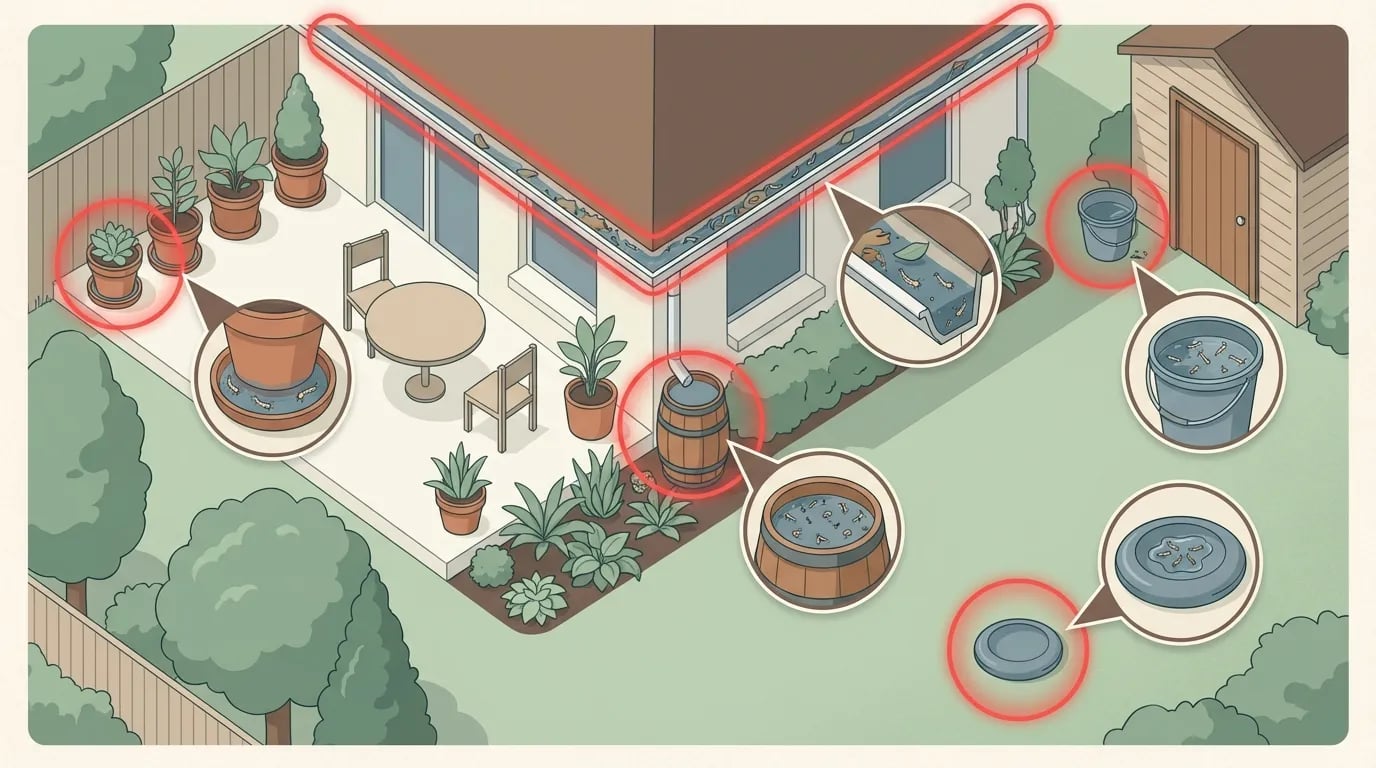
Insects, like people, seek three basic things: food, water, and shelter. If we reduce access to these, their population will naturally decrease. This means maintaining strict yard hygiene. Stagnant water in plant pot saucers, forgotten buckets, or uncleaned gutters are the perfect incubators for mosquitoes. Rotting fruit under trees and open trash bins attract wasps, flies, and ants. Tall grass and stacked firewood are shelters for ticks and spiders. Regular mowing, cleaning, and draining are the first and most important step in pest control. This is so-called sanitary control, without which no chemical treatment will have a lasting effect.
Day and Night: Different Shifts, Different Strategies
It is important to distinguish insect presence according to the time of day. During the day, we are active, but so are bees, wasps, and flies. At night, the baton is passed to mosquitoes and moths.
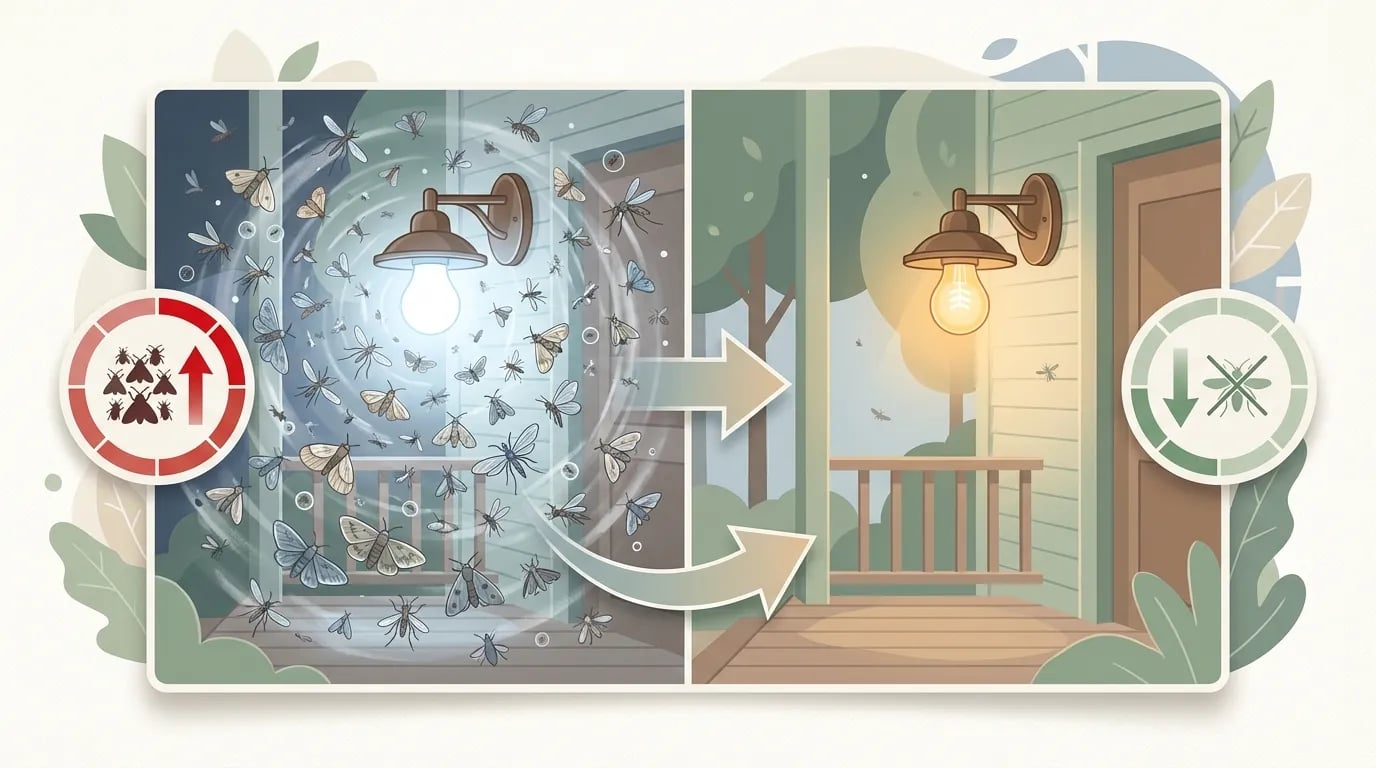
Here we must be realistic: the complete absence of insects at night, with outdoor lighting on, is practically impossible. Phototaxis (movement toward light) is a deeply ingrained instinct in many insects. As long as you have a strong light source in the darkness, it will act as a beacon for everything flying within a radius of hundreds of meters. Even the most powerful poison cannot stop this flow instantly. Understanding this fact helps us manage our expectations and seek technical solutions.
Non-Chemical Means of Control: The Intelligent Defense
Instead of spraying poisons into the air we breathe, we can use physical and mechanical barriers.
1. Light Control
There are two approaches to lighting. The first is the use of insecticidal lamps (so-called "insectocutors"). They emit ultraviolet light that attracts insects toward a high-voltage grid. They are effective but have a drawback - they also attract beneficial nocturnal insects, and sometimes the "popping" is annoying.
The second, more elegant approach is replacing your veranda bulbs with ones that emit warm yellow or orange light. Insects see the light spectrum differently from us; they are strongly attracted to blue and white light, but the yellow spectrum is almost invisible to them. Such a lamp will not kill them, but it simply will not invite them to your table.
2. Traps and Lures
For flying nuisances during the day (such as flies) and at night, sticky tapes and panels are a classic. They are non-toxic and do a wonderful job if placed strategically. A higher level of protection comes from pheromone traps. They use sexual attractants to lure a specific pest species (for example, a particular type of moth or wasp) into a trap from which there is no escape. Their advantage is that they are selective - they do not catch bees or butterflies, only the target pest.
3. The Power of Plants
Nature has created its own repellents. Essential oils from citronella, lavender, mint, eucalyptus, and geranium have a proven repelling effect. Using aromatic candles or diffusers with these oils creates an "aromatic shield." Although they are not 100% effective against a hungry mosquito, they significantly reduce the number of attacking insects.
4. Physical Barriers
The surest way to spend the evening without a single bite is the old, tried-and-true gazebo with dense mosquito nets. This is a mechanical barrier that no chemical can surpass in effectiveness and safety.
When Chemistry Is Necessary: Precision Versus Mass Destruction
If prevention and mechanical methods do not help and the pest population becomes intolerable (for example, an invasion of ants or cockroaches near the house), it is time for biocides. Here the rule is: be a sniper, not an artillerist.
Mass spraying of the entire yard with a broad-spectrum insecticide is a mistake. Such products kill everything indiscriminately - the pests, but also their natural enemies (spiders, ladybugs, praying mantises, lacewings). The paradox is that pests often recover faster than predators, which leads to an even larger invasion after a few weeks.
Instead, use forms that are localized and aimed directly at the problem:
- Insecticidal gels and bait stations: They are extremely effective against ants and cockroaches. The insect eats the poison and carries it back to the nest, destroying the colony from within. These products do not spread through the air and do not threaten other species.
- Powders: They are placed in cracks and hiding spots where only the pests pass through.
Protecting Bees: A Vital Responsibility
When we talk about using insecticides in the garden, our greatest responsibility is toward bees and other pollinators. Without bees, our garden is doomed to barrenness. No bees - no pollination. No pollination - no tomatoes, no apples, no zucchini, and flowers will not produce seeds. Disrupting this cycle leads to an ecological collapse in miniature.
If spraying is necessary (for example, against aphids or mites), it must comply with time restrictions. Bees are active during the day, when the sun shines and flowers are open.
Insecticide treatments must be carried out only early in the morning (before bee flight) or preferably late in the evening (after sunset). At that time, bees have returned to their hives. Furthermore, flowering plants should never be sprayed directly, because the poison remains in the pollen and nectar.
Conclusion: The Garden as a Micro-Ecosystem
The outdoor yard is not simply an appendage to the house but a living, breathing micro-ecosystem. It exists in a state of dynamic equilibrium between the environment (soil, water, air) and the organisms that inhabit it. When we understand this equilibrium, we stop fighting nature and begin to manage it intelligently.
Complete sterilization of the yard is a utopia that leads to more problems than solutions. Our goal should be to control the pest population to levels that do not bother us, while simultaneously protecting the beneficial species that work for us.
If you do encounter a massive invasion (for example, a hornet nest, a flea or tick infestation), do not try to be heroes with a spray can from the supermarket. The most sensible solution is to seek help from a professional pest control operator (DDD company). Professionals have knowledge of the pest's biology and access to specialized products and equipment that allow the problem to be solved effectively, safely, and with minimal damage to the invaluable ecosystem of your yard.
Pest Control Manager at "Biogard" EOOD
Iliyan Dimitrov is the Head of Pest Control (DDD) at Biogard Ltd. He leads disinsection, deratisation and disinfection operations for clients across the Ruse, Razgrad, Targovishte and Silistra regions.
All articles by the author