Pigeons in the City: Charm, Noise, and Problems We Never Suspected
Pigeons strut proudly through the square and watch the world from our rooftops. But does this idyllic coexistence hide a darker side? Learn what risks they carry and how to manage them wisely.

Pest Control Manager at "Biogard" EOOD
- Published on
- min. read
- 4 min. read
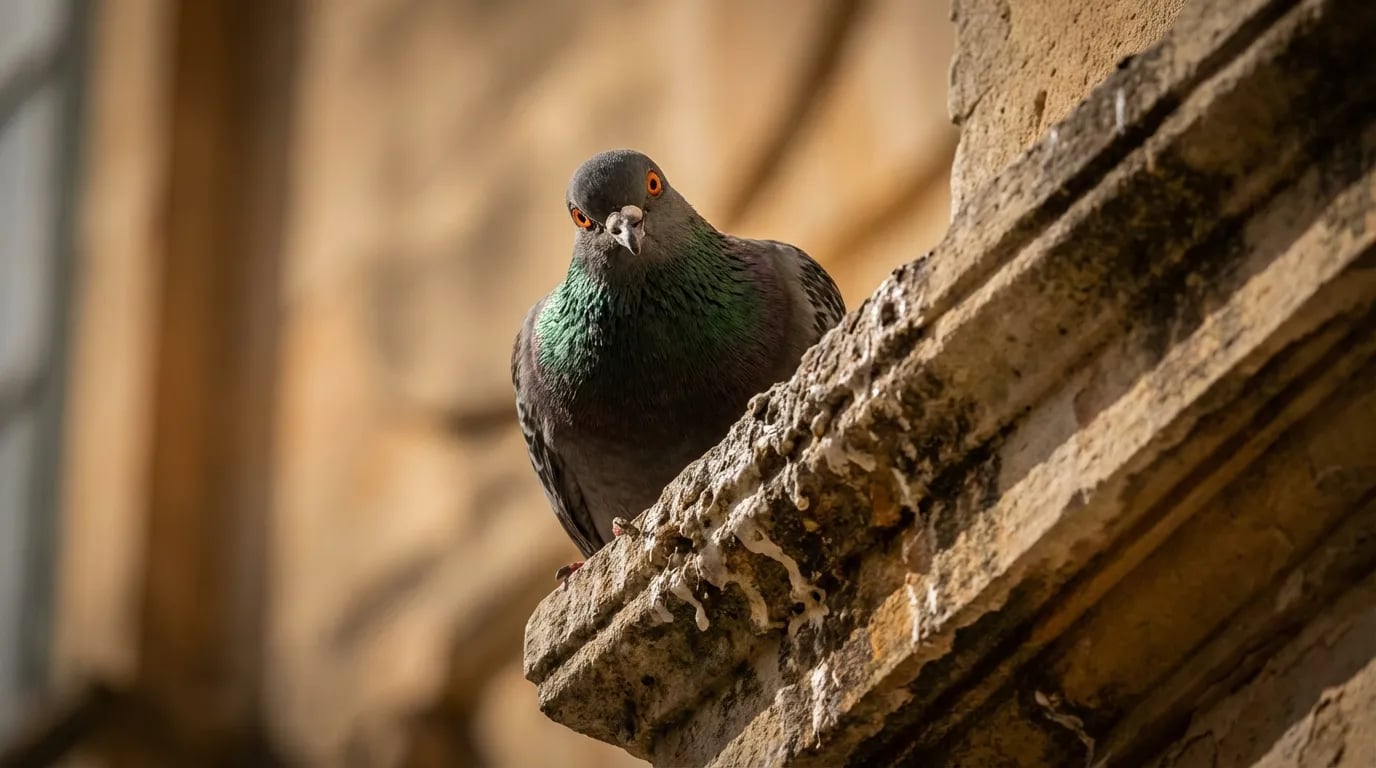
Table of Contents
Pigeons - the feathered "tenants" that nobody invited, but we all end up with. They strut proudly through the square, pose on monuments, and observe the world from our rooftops. But does this idyllic coexistence hide a darker side? And why do our rooftops so often resemble a scene from a movie we never wanted to watch?
What Risks Do Pigeons Carry - and Why Shouldn't We Underestimate Them?
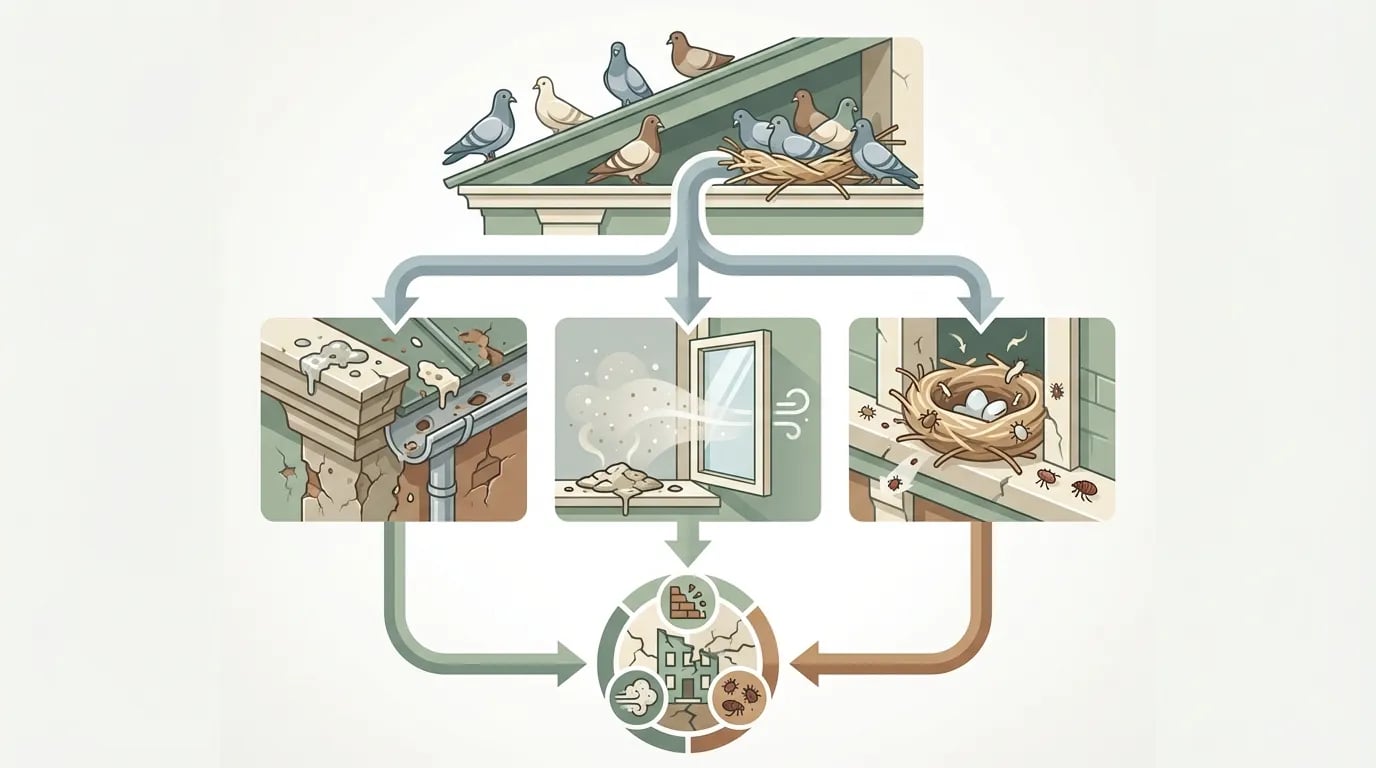
Pigeons themselves are rarely a direct danger, but the "traces" they leave behind can create real health risks. Their droppings dry out, turn to dust, and become part of the air we breathe. Sounds unpleasant? It is.
This dust can contain microorganisms that, with prolonged contact, increase the risk of respiratory complaints, especially for people with sensitivities. Nobody rushes to fall ill just because a pigeon flew by, but when a building turns into a "bird dormitory," the problems start to pile up.
Droppings - Small in Appearance, Major in Consequences
Pigeon traces have one unpleasant characteristic: they never stop appearing. If you have ever cleaned a balcony where "city postmen" land daily, you know how labor-intensive it is. But there are more serious aspects:
Acidity That Corrodes
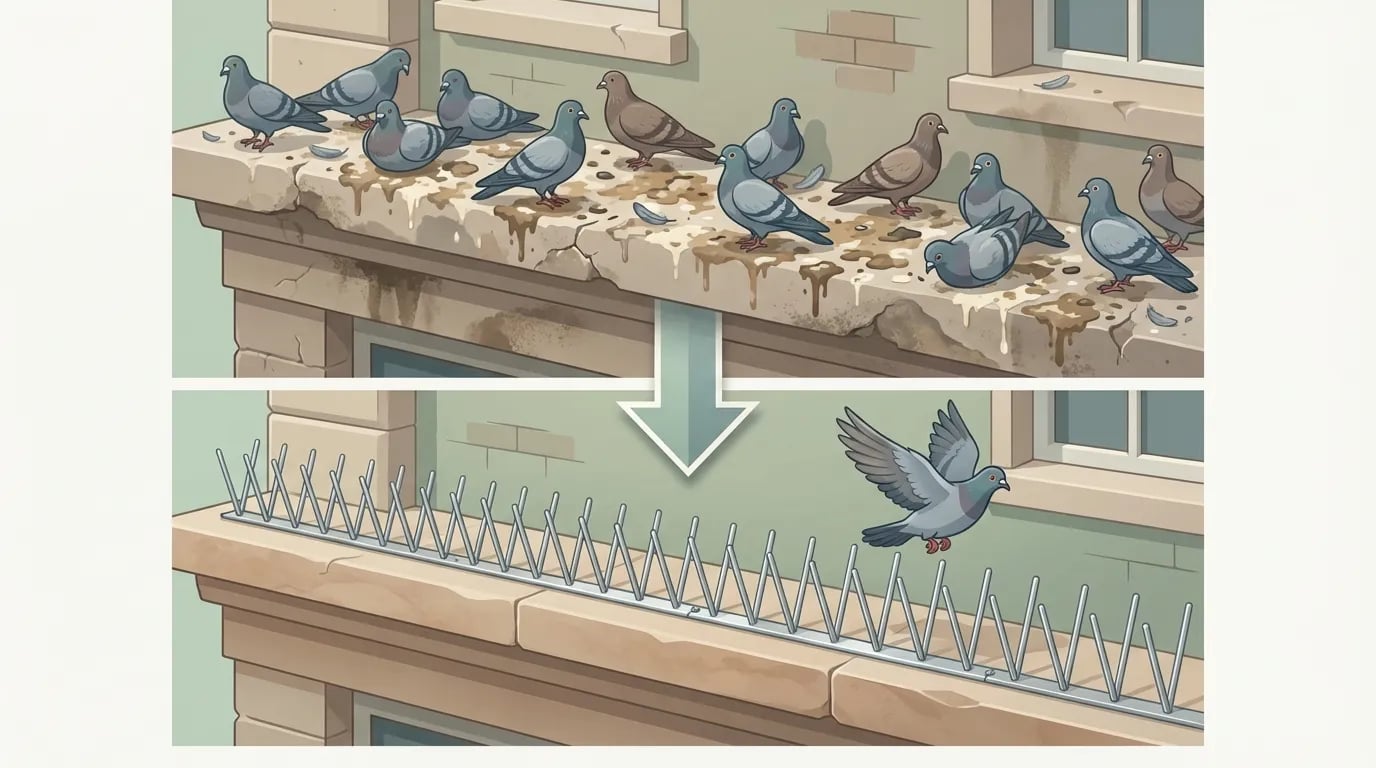
Fecal material is acidic and over time damages concrete, stone, and metal. Stains and erosion appear, and the material literally begins to crumble.
Odors Nobody Ever Dreamed Of
Pigeon colonies can turn an otherwise cozy inner courtyard into a place with a persistent unpleasant smell.
Attracting Other Pests
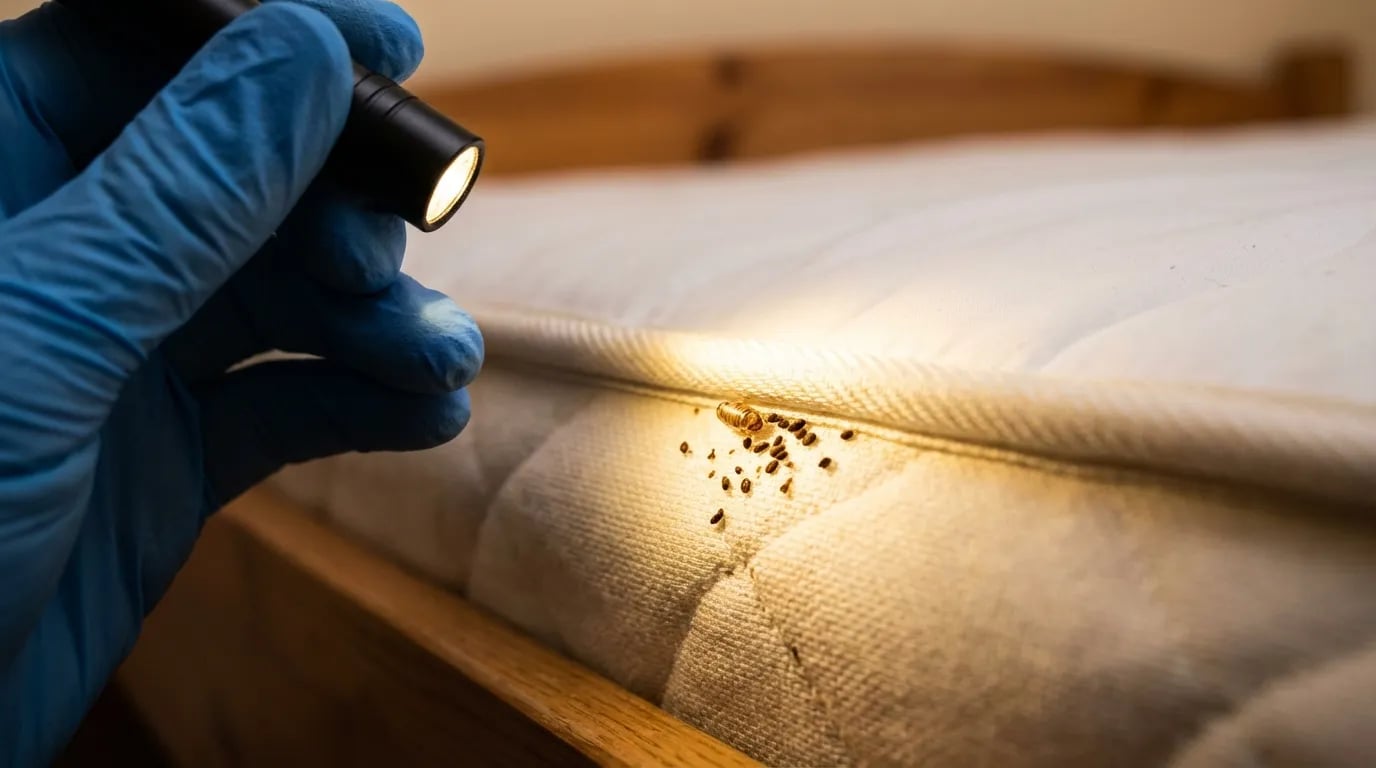
If pigeons create the conditions, "guests" arrive too - insects, rodents, and whatever else finds food.
Damage to Buildings and Monuments - Why Architects Are Not Fans of Pigeons
Monuments, statues, facades - all of this is an ideal venue for pigeon "gatherings." Unfortunately:
- acids from droppings destroy limestone and marble
- nests clog gutters and drainage systems
- feathers and nesting material cause leaks and damage
Sometimes the restoration of a monument, literally eaten away by pigeon traces, costs more than seems logical. But the damage accumulates slowly and often goes unnoticed until it is too late.
Methods for Limiting Pigeons - What Works and What Is Pure Legend?
Food Source Control
If there is food - there are pigeons. If there isn't - they leave. This is the simplest equation. That is why many cities now prohibit feeding birds. Bread thrown "just once" sustains a stable population for dozens of days.
Physical Barriers
The most reliable solution:
- landing spikes - they do not injure birds, they simply prevent them from landing
- nets - ideal for balconies, attics, and indoor areas
- tensioned wires - minimal intervention, maximum effect
The principle is simple: if there is no surface to land on, there are no pigeons.
Regular Maintenance and Nest Removal
If a niche is convenient for nesting, it will be used again and again. Filling openings and cracks eliminates the problem at its root.
Ultrasonic Devices - An Advertising Illusion
If these devices worked, all cities would be empty of birds. But:
- pigeons get used to them
- the effect is localized
- in many cases there is no change at all
Sounds great on the packaging, but in reality it does not work.
What Is NOT Allowed
Destroying pigeons is prohibited. Legislation requires humane methods, without injuring and without killing. The solution lies in prevention, not in violence.
Who Is Responsible for Maintaining Residential Buildings?
In residential buildings, responsibility is clearly distributed:
- Apartment owners are responsible for their balconies, ledges, and private areas.
- The condominium association is responsible for common areas: rooftops, facades, entrances, stairwells, and inner courtyards.
- The building manager has the task of organizing maintenance, including measures against pigeons, but decisions are made by the General Assembly.
If the facade is crumbling because of birds, it is a shared problem. If a balcony is constantly soiled due to the lack of a net - that is an individual commitment.
So... How Do We Live with These Feathered Roommates?
Pigeons are not going to leave on their own. They feel perfectly at home in the city: it is warm, there is food, and there are places to nest. But with the right measures, a balance can be achieved. We do not need to love them, but it is important to manage them wisely.
And the next time you see a pigeon landing proudly on a monument, perhaps you will ask yourself: "Is this charmer really worth the cost of restoration?"
Pest Control Manager at "Biogard" EOOD
Iliyan Dimitrov is the Head of Pest Control (DDD) at Biogard Ltd. He leads disinsection, deratisation and disinfection operations for clients across the Ruse, Razgrad, Targovishte and Silistra regions.
All articles by the author